Historical Preservation
Historical preservation involves commemorating Native American heritage. Tribal Historic Preservation Offices (THPO) are officially designated by Tribes and serve the same function as a State Historic Preservation Office. Our tribal historic preservation Officer is Liz Santana. Here are some of the projects that she has collaborated with other organizations to preserve our history:
Wissatinnewag-Peskeompskut
Wissatinnewag, the Algonquin word for "shining hill", was once a village on the Connecticut River, where the Pocumtuck, Abenaki and Nipmuck lived year-round. Indigenous people from several other tribes, including the Wampanoag and the Narragansett would visit every spring to fish near the Great Falls. This village was inhabited for thousands of years and Wissatinnewag was the last remaining undeveloped piece of what had been this extensive village.
The village was brought to a close by the disastrous King Philip’s War of 1675-76 and the massacre that occurred at the falls on May 19, 1676, where hundreds of non-combatant villagers; mostly elderly, children and women were slain by a colonial militia led by William Turner. Some tried to escape by hiding in caves but between 200 and 300 Native people were killed.
This event is known by many names, the Battle of Grand Falls, the Battle of Turner’s Falls, and the Peskeompskut-Wissantinneway Massacre. We prefer to call it the Great Falls Massacre.


The massacre marked a turning point in the war, and in the colonization of Native lands by British settlers. The war led to the expulsion of most Native Americans in the Connecticut River Valley. Sadly, this tragic historical event is marked by a large cement monument memorial to Turner and the “Battle”.
White Ash Swamp is a ten-acre site, located on the last remaining undeveloped piece of Wissitinnewag. Decades ago, it was discovered that human skeletons were being used as fill during the excavation of route 2. This began decades of effort to protect the remains and to preserve the ancient Native American village on the Connecticut River at the Great Falls.
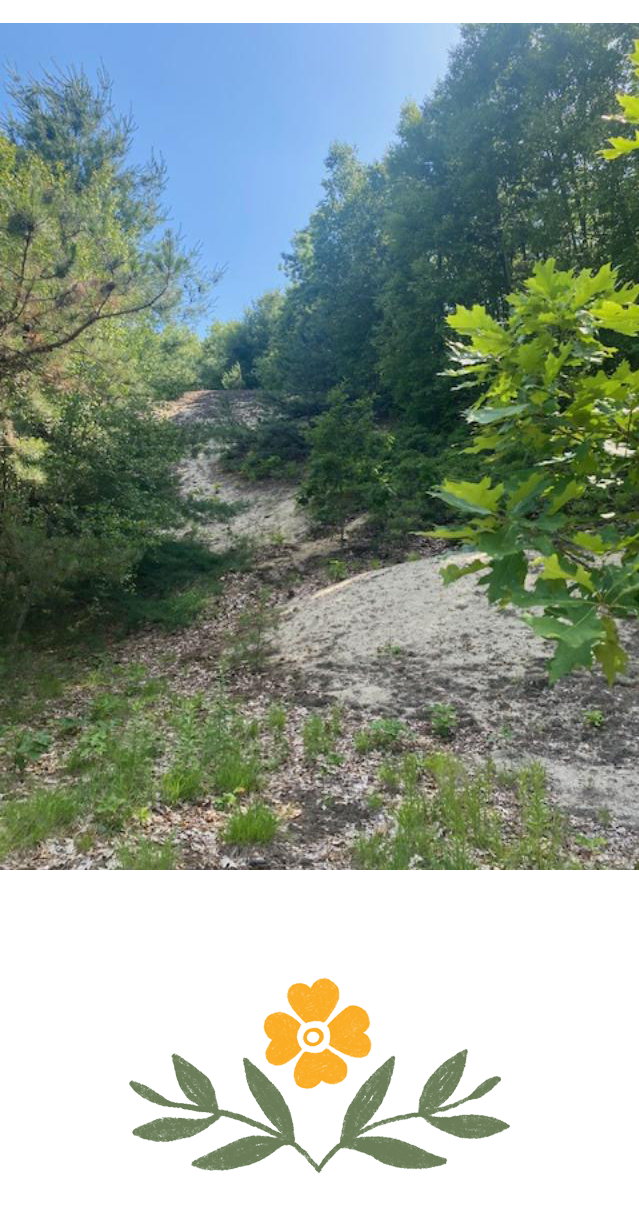
Today Wissatinnewag is now private land, protected in perpetuity by a Conservation Restriction. The forty-acre property located on the basalt ridgeline overlooking the fishing falls of Peskeompskut and on adjacent sand plains now reverting to meadow and pitch pines is stewarded by the Nolumbeka Project. It is a welcoming place for Native people to visit to renew spiritual connections with the river and with their ancestors who lived there, to conduct cultural teachings, and to help heal past trauma.
The Nipmuck community continues to collaborate with the Nolumbeka Project on our collective vision to have these historical sites deeded back to the original inhabitants of the area and to correct history by changing the term “Battle” to Massacre.
Note from Deb Frechette:
I had the privilege of meeting David Brule and Brent during the last day of a vacation to the Deerfield area. They graciously spent over two hours, in the scathing heat of a very hot day with me and my husband explaining the history and significance of Wissatinnewag and the surrounding area and providing us with a guided tour of the village area, the monument and the Wissatinnewag land. The photos on this page are from that visit.
Please visit the Nolumbeka Project website to view a very moving, short film about Wissatinnewag, which provides more extensive photos and further details about this very sad period in our history.
The following link provides further information about the Massacre at Great Falls.
Remembering & Reconnecting: Nipmucs and the Massacre at Great Falls
Contributors: Nipmuc Nation Elders Council, David Tall Pine White, Cheryll Toney Holley

The History of Deer Island
Deer Island is the location where many citizens of the Nipmuck tribe lost their lives over the winter during their internment during King Philip's War. In conjunction with the National Congress of American Indians, and other groups , we participated in a long battle against the desecration caused by construction of a sewage treatment plant on Deer Island in Boston Harbor where many of our Nipmuck people were buried. A plaque was erected to document this tragic event.
In remembrance, our citizens attend an annual service and protest against the destruction of Indian gravesites.

Database of Enslaved Indigenous People
Stolen Relations Recovering Stories of Indigenous Enslavement in the Americas is a community-based project housed at Brown University. The project is a collaborative effort to build a database of enslaved indigenous people throughout time all across the Americas in order to promote greater understanding of the historical circumstances and ongoing trauma of settler colonialism.
David Tall Pine White
One of the original CBNI partners who worked on the history of the area. His work there provided a foundation for CBNI involvement and current work on the history and preservation of the area.
— Working with Nolumbeka
Liz Cold Wind Kiser
Liz Cold Wind Kiser continued the relationship to study the Massacre. Her work elevated and helped establish our connection to this space. As a Battlefield Advisory Council board member and representative of the CBNI, she has restored our historical Nipmuck ties to the area through hard work and dedication to the cause. There are now walking tours and signage commemorating the homesite and massacre with a Nipmuck Narrative to tell the true story of the area. Suggested listening spots for individual stories are posted along the Unity Park bike path in Turners Falls. These GPS locations correspond to the map on the STQRY app. Begin at the kiosk at the end of the bike path on First Street. Go to https://peskeompskut.stqry.app/
The Peskeompskut Audio Tour is a RiverCulture project, funded by a Mass Humanities Expand Massachusetts Stories Grant.
— Battlefield Advisory Council board member
Ite Little Arrow Santana
Serves as a board member for the Nolumbeka Project and is working diligently to bring Nipmuc stewardship and presence to the area and to understand what a possible shared relationship would look like with stewardship.
Nolumbeka Board Member

CBNI Tribal Council Members
Official ceremonial & honored speakers at the annual ‘Day of Remembrance’
- Liz ‘Cold Wind’ Kiser (1st from left)
- Ken ‘Kind Warrior’ White (2nd from left)
- Ite ‘Little Arrow’ Santana (5th from left)
'Day of Remembrance' in Turners Falls for Native victims of 1676 massacre
New England Public Media | By Nancy Eve Cohen
Published May 16, 2023 at 2:13 PM EDT